How Deep Do Massage Guns Work into Muscle?
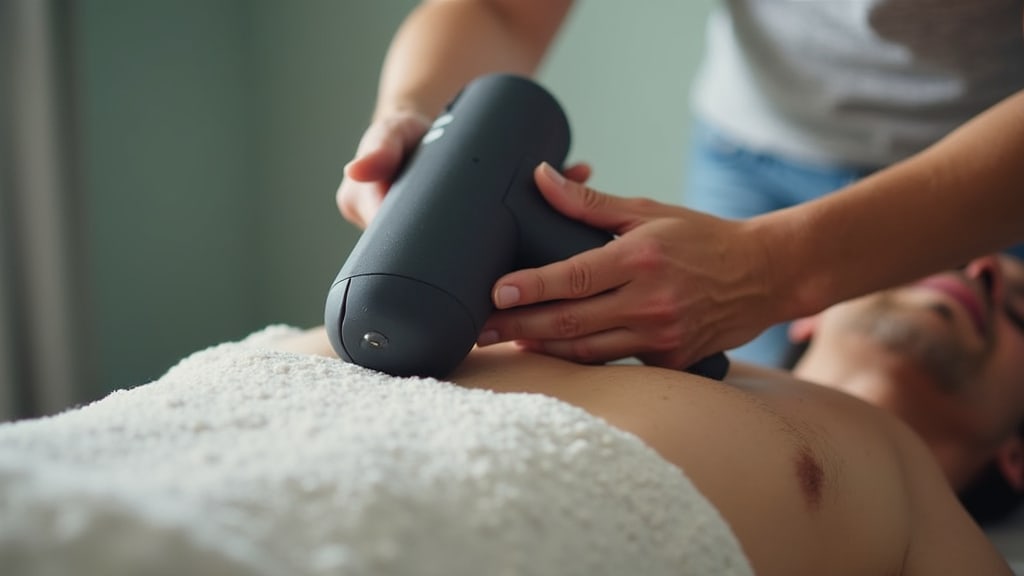
Understanding the Reach of Massage Gun Percussion Therapy
A massage gun delivers rapid, forceful pulses into your muscle tissue. Think of it like a small, powerful jackhammer. The depth of its work isn’t just about how deep it feels. It depends on the device’s stall force, the speed settings, and the attachment you choose. Your own body’s tension plays a role, too. Generally, these tools are designed to affect the top layers of muscle and the connective tissue around it.
The Layers of Muscle a Massage Gun Can Influence
Your body isn’t just one solid block. A massage gun’s percussion primarily targets the outermost layers of soft tissue. This includes the skin and the layer of fat just beneath it. More importantly, it works on the **fascia**. Fascia is the web-like connective tissue that surrounds and runs between every muscle, bone, and nerve in your body. It’s a major target for percussive therapy.
Focusing on the Superficial Musculature
The immediate effect of a massage gun is felt in the **superficial muscles**. These are the muscles right beneath your skin, like the outer part of your quadriceps or your upper trapezius. The rapid pulses help to stimulate blood flow to these areas. This increased circulation can help reduce feelings of soreness and temporarily increase range of motion (National Institutes of Health).
What About the Deep Muscles?
Reaching very deep muscles, like the psoas hip flexor or the rotator cuff deep within the shoulder, is much harder. A massage gun, by design, cannot penetrate like a deep tissue massage from a trained therapist. Its percussive force dissipates as it travels through tissue layers. While some sensation may reach deeper areas, the primary mechanical effect is on the outer 1-2 inches of muscle and fascia.
Key Factors That Determine Massage Gun Depth
Not all sessions feel the same. You control the depth of impact with a few simple variables. Understanding them helps you use the device effectively and safely.
- Stall Force: This is the pressure you can apply before the motor stalls. A higher stall force (20 lbs+) allows you to push harder without stopping the device, which can help affect denser muscle tissue.
- Amplitude (Stroke Length): This is how far the head moves back and forth. A higher amplitude (12-16mm) creates a deeper, more forceful impact. A lower amplitude (8-10mm) is more superficial and gentle.
- Frequency (Speed): Measured in percussions per minute (PPM). Higher frequencies (2500-3200 PPM) are great for superficial tissue and circulation. Lower frequencies (1500-2000 PPM) can feel deeper and more intense.
- Your Body Composition: The amount of adipose (fat) tissue between your skin and muscle will cushion the impact. Less cushion means the percussion reaches muscle sooner.
Attachment Head Guide: Matching Tool to Treatment
The head you attach changes everything. The shape determines how force is distributed over a small or large area. Using the wrong one can make the therapy less effective or uncomfortable.
| Attachment Type | Best For | Depth & Sensation |
|---|---|---|
| Ball Head | Large muscle groups (glutes, quads, chest) | General, moderate depth. Good all-rounder. |
| Flat Head | Dense, flat areas (IT band, back) | Broader, slightly superficial pressure. |
| Thumb/Cone Head | Trigger points, small areas (feet, traps) | Focused, deep pinpoint pressure. |
| Fork Head | Tendons, spine (with caution), Achilles | Targets specific, narrow structures. |
| Air Cushion Head | Sensitive areas, beginners, near bone | Soft, superficial, very gentle. |
Safety First: Respecting Tissue Boundaries
You should never feel sharp, stabbing pain. A massage gun is not a tool to punish sore muscles. The goal is relief, not injury. Overusing it or pressing too hard on sensitive areas can cause bruising, nerve irritation, or tissue damage. The **American Academy of Orthopaedic Surgeons** advises caution around the neck, spine, and major arteries.
When to Keep the Massage Gun Away
Certain situations call for you to avoid percussive therapy altogether. If you have acute injuries, open wounds, or deep vein thrombosis (DVT), you must not use a massage gun. It’s also not for bony prominences like your spine, shoulder blades, or kneecap. Pregnant individuals should consult a doctor first. Always start with low pressure and short durations on a new area.
How Massage Guns Affect Muscle Recovery
The main benefit isn’t physically breaking up scar tissue (a common myth). Instead, research points to neurological and circulatory effects. The rapid percussion stimulates sensory receptors in your muscles. This can **trick the nervous system** into reducing tension and lowering the perception of pain. It’s similar to how rubbing a bumped elbow helps soothe the ache.
The Blood Flow Boost
Using a massage gun increases local blood flow. More blood delivers oxygen and nutrients to the area while helping flush out metabolic waste products. This process may support a faster recovery from exercise-induced muscle soreness (DOMS). A 2019 study in the *Journal of Clinical and Diagnostic Research* found that percussive therapy improved range of motion and reduced muscle soreness in athletes.
Managing Expectations: What Massage Guns Can’t Do
It’s important to be realistic. A massage gun is a fantastic tool for self-care, but it has limits. It is not a replacement for professional medical treatment, physical therapy, or surgery. You cannot “break up” significant scar tissue or realign muscle fibers with a handheld device. These are complex processes that require specialized manual therapy.
They Are a Supplement, Not a Cure
Think of a massage gun as a **supplement** to a good recovery routine. It works best when paired with proper nutrition, hydration, sleep, and gentle movement. Using it for a few minutes post-workout can feel amazing. But using it excessively every day won’t necessarily speed up your recovery more than rest alone. Listening to your body is the most important guide.
Practical Tips for Effective Use
To get the most out of your device while staying safe, follow these straightforward guidelines.
- Start Slow: Begin on the lowest speed setting and with light pressure. Increase intensity gradually as your body adapts.
- Limit Time: Spend no more than 30-60 seconds on a single large muscle group. Move the device regularly—don’t “park” it in one spot.
- Use on Relaxed Muscles: Use it after your workout or during a rest day, not directly on a muscle that is already painfully strained.
- Hydrate: Drink water before and after use. Hydration helps muscles flush out waste products more efficiently.
- Consult a Pro: If you have chronic pain or a serious condition, talk to a physical therapist or doctor before adding a massage gun to your routine.
Your Quick-Reference Safety Checklist
Before each session, run through this mental checklist:
- Am I using it on soft tissue, not bone?
- Is the pressure moderate and pain-free?
- Have I limited my time on each muscle?
- Are my muscles generally relaxed, not acutely injured?
- Do I have any health conditions that require a doctor’s clearance?
Conclusion
You now know that a massage gun primarily works on the outer layers of muscle and the connective fascia beneath your skin. Its depth is controlled by your settings and attachments. Remember, it’s a powerful tool for promoting circulation and easing superficial tension. It isn’t designed for deep, internal muscle manipulation. For the best results, start on a low setting and use it on relaxed muscles. Your next step is simple: try using your massage gun on a large muscle group like your quadriceps, starting with light pressure. Listen to your body and adjust based on how it feels.
Frequently Asked Questions
Can a massage gun reach the deep muscles in my back?
A massage gun cannot effectively reach deep muscles like your core or the small stabilizers in your spine. Its percussive force dissipates through the outer tissue layers. For back relief, focus on the superficial muscles like your traps and lats, which can help reduce overall tension.
Will using a massage gun cause injury if I press too hard?
Yes, applying too much pressure can cause bruising, nerve irritation, or tissue damage. You should never feel sharp, stabbing pain. Always use moderate pressure, limit time on one spot, and avoid bony areas and sensitive regions like your neck.
How is percussive therapy different from a deep tissue massage?
A therapist’s hands can apply specific, sustained pressure to reach deep muscle layers. A massage gun uses rapid percussion that mainly affects the surface. It’s excellent for circulation and surface tension but cannot replicate the deep manipulation of a professional massage.
Can I use my massage gun every day for recovery?
Daily use can be fine for light recovery, but listen to your body. Overusing it may irritate sore muscles. It works best as a supplement to rest, hydration, and good nutrition. Limit sessions to 30-60 seconds per muscle group to avoid overstimulation.
What should I do if my massage gun doesn’t seem to reach the right spot?
First, ensure you’re using the correct attachment head for the area. Second, check your stall force and amplitude settings. Finally, make sure you’re applying it to a relaxed muscle, not a tensed one. If you still can’t find relief, consult a physical therapist for guidance.