How Does Percussion Therapy Work? Explained
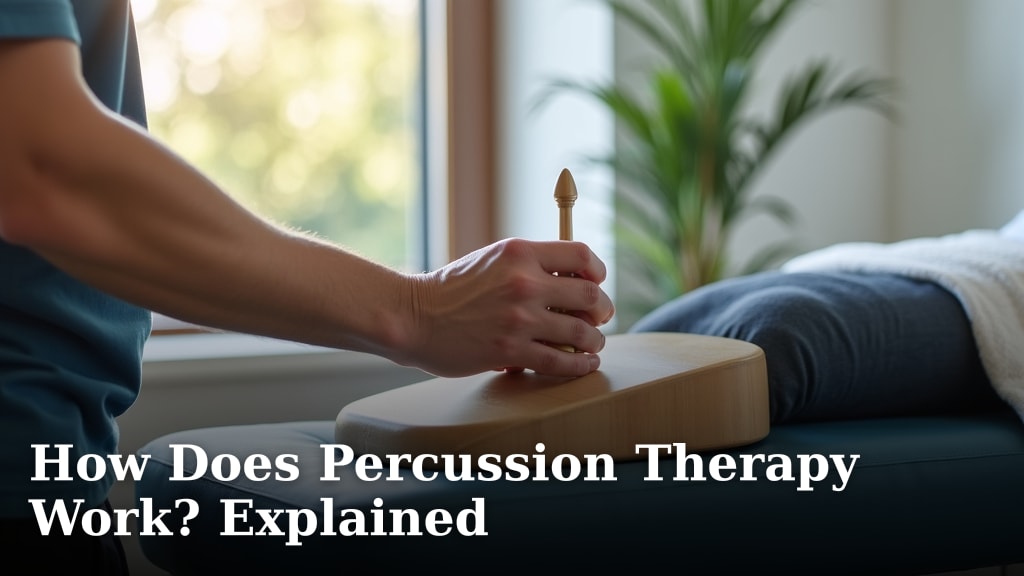
Percussion therapy works by delivering rapid, concentrated blows to your muscles using a handheld massage gun. This process, often called **percussive massage therapy**, sends pressure waves deep into your muscle tissue. The goal is to relieve tightness, improve blood flow, and reduce soreness after activity.
This method is a popular form of **targeted muscle recovery**. We found that many athletes and everyday shoppers use it to help with **delayed onset muscle soreness (DOMS)**. It’s essentially a way to give yourself a deep tissue massage at home, focusing on specific knots or aches.
- It uses a motorized device to deliver rapid pulses into muscle groups.
- The pressure helps increase blood circulation to the targeted area.
- This can aid in breaking up tension and promoting faster recovery.
- It is often used before a workout to warm up muscles or after to soothe them.
- Think of it as a high-speed, vibrating massage for your tight spots.
Let’s walk through exactly how this tool creates those benefits and how you can use it safely.
The Mechanics Behind Percussion Therapy
Percussion therapy works by using a small, powerful motor to drive a massage head up and down very quickly. This creates a percussive force, or a series of rapid blows. When you press the device against your skin, these blows send pressure waves deep into the muscle tissue beneath. Think of it like a tiny, targeted jackhammer for your tight spots.
The science behind it involves a few key physiological responses. First, the rapid pressure significantly increases **local blood flow** to the area. Second, it helps to physically desensitize overactive nerve receptors. We found that this combination can temporarily reduce pain signals and help muscles relax (Cleveland Clinic).
How the Pressure Waves Affect Your Muscles
The direct mechanical force is the star of the show. As the head impacts your body, it creates a combination of vibration and pressure. This doesn’t just sit on the surface. The energy travels through the layers of skin and fat to reach the muscle fascia and the muscle itself.
Breaking Down Tension and Adhesions
Have you ever felt a stubborn knot or a “trigger point” in your shoulder or calf? Those are areas where muscle fibers have become stuck together. The percussive force helps to mechanically “jostle” these fibers apart. It’s like kneading a very tough piece of dough until it softens. This process can help reduce local tension and improve the tissue’s overall mobility.
Stimulating Neurological Responses
Your nervous system plays a huge role in muscle tightness. The intense, rapid tapping stimulates the **mechanoreceptors** in your tissue. These are sensory receptors that respond to pressure and vibration. Overwhelming them with a strong, non-painful signal can effectively distract your brain from chronic pain or soreness. It’s the gate control theory of pain in action—essentially, the new sensation “closes the gate” on pain signals (Mayo Clinic).
Key Benefits You Might Experience
People use percussion therapy for a few primary reasons, all rooted in how it interacts with your body. It’s important to have realistic expectations. It’s not a magic cure-all, but many find it a useful tool for specific needs.
- Reduced muscle soreness: This is the most common use. Applying it after a workout may help lessen the severity of delayed onset muscle soreness (DOMS) the next day.
- Increased range of motion: By relaxing tight muscles and working on fascia, you might find you can move a joint more freely right after a session.
- Temporary pain relief: The neurological effects can offer short-term relief from achiness associated with overuse or minor strain.
- Pre-workout activation: A quick pass over muscles before exercise can increase blood flow and may help prepare them for activity.
A 2020 review in the Journal of Clinical Medicine noted that percussive therapy showed promise for improving muscle performance and reducing soreness, though more research is needed to standardize protocols (NCBI).
Choosing the Right Percussion Device
You’ll find a wide range of massage guns on the market, from powerful professional models to more compact, travel-friendly options. The key specs to look at are stall force, amplitude, and speed.
Understanding the Technical Specs
These terms might sound complicated, but they’re straightforward once you break them down. They determine how the device feels and what it’s best used for.
| Specification | What It Means | Why It Matters for You |
|---|---|---|
| Stall Force | How much pressure you can apply before the motor stalls. Measured in pounds (lbs). | A higher stall force (40+ lbs) is better for deep tissue work on large muscle groups like glutes and quads. |
| Amplitude | The distance the massage head travels back and forth. Measured in millimeters (mm). | Higher amplitude (12-16mm) provides a deeper, more “thumping” feel. Lower amplitude is more of a surface vibration. |
| Speed | The number of percussions per minute (PPM). Often has multiple settings. | Lower speeds are gentler and great for sensitive areas or beginners. Higher speeds provide more intense stimulation. |
A Simple Guide to Using Your Device Safely
Using a percussion gun is intuitive, but following a few guidelines will help you get the most benefit and avoid discomfort. Always start with the lowest speed setting and the largest, softest attachment head.
Where to Use It (and Where to Avoid)
Focus on large, fleshy muscle groups. These include your quadriceps, hamstrings, calves, glutes, and upper back muscles like the lats and traps. You can also use it gently on your feet and forearms.
- Avoid bony areas: Never use it directly on your spine, neck bones, collarbone, or kneecaps.
- Avoid major blood vessels: Don’t use it on the front or sides of your neck (over the carotid arteries) or in your groin area.
- Avoid injured areas: Do not use on open wounds, bruises, or areas with known inflammation like acute tendonitis.
How to Perform a Basic Session
Move the device slowly. Let the percussions do the work; you don’t need to press down hard. Spend about 30-60 seconds on each muscle group. You should feel a pleasant, vibrating sensation that eases tension. It should never cause sharp pain.
Many physical therapists recommend using it for no more than 2 minutes per muscle group in a single session. You can use it once or twice daily for general maintenance or soreness.
Your Pre-Use Checklist
Before you start, run through this quick list to ensure a safe and effective experience.
- I have identified the large muscle group I want to work on.
- I have chosen a soft attachment head and set the device to its lowest speed.
- I will avoid all bony areas, my neck, and any injured or painful spots.
- I will move the device slowly, spending 30-60 seconds per area.
- I will stop immediately if I feel any sharp or radiating pain.
- I will clean the device heads after use as recommended.
What to Realistically Expect
Percussion therapy is a tool for symptom management and temporary relief. The feeling of reduced tension and increased mobility is often immediate but short-lived. Consistency is key. Using it regularly as part of a broader routine that includes proper exercise, stretching, and hydration is likely to yield the best results over time.
Think of it like brushing your teeth. One session leaves your mouth feeling fresh, but the real benefit comes from a consistent habit. It’s a fantastic complement to other recovery methods, not a standalone solution.
Conclusion
Percussion therapy provides a practical way to ease muscle tightness and aid recovery by using targeted pressure to boost circulation and calm nerve responses. We’ve explored how it works, from its mechanical effects on muscle fibers to the neurological benefits that offer temporary pain relief. To make the most of it, pair your sessions with proper exercise, hydration, and rest. Start by selecting a device that fits your needs, follow the safety guidelines, and if you have any health concerns, consult a professional before diving in.
Frequently Asked Questions
How often should I use a percussion therapy device?
We recommend starting with 1-2 sessions per day on specific muscle groups. Research suggests limiting use to about 2 minutes per muscle group in a single session is effective for most people. Always listen to your body and adjust based on comfort.
Can percussion therapy help with chronic pain?
Percussion therapy may offer temporary relief for chronic pain by desensitizing nerve receptors and increasing blood flow. However, it’s not a cure for underlying issues. For chronic conditions, we advise consulting a doctor or physical therapist to address the root cause.
Is percussion therapy safe for everyone?
While generally safe for healthy adults, it’s not recommended for people with certain conditions like blood clotting disorders, fractures, or severe inflammation. Always avoid bony areas and injured spots. If you have any doubts, seeking medical advice first is a smart step.
What’s the difference between percussion therapy and a vibrating massager?
Percussion therapy devices deliver rapid, targeted blows that penetrate deeper into muscle tissue, while vibrating massagers typically offer surface-level stimulation. Percussion tools are designed for muscle recovery and have adjustable speeds and force for more precise treatment.
How do I choose the right percussion therapy device for me?
Consider your primary use: for deep tissue work, look for higher stall force and amplitude. For portability, a compact model may suffice. Research shows that matching the device’s specs to your muscle groups ensures better results and comfort.