Massage Gun Deep Tissue Benefits: A Simple Guide
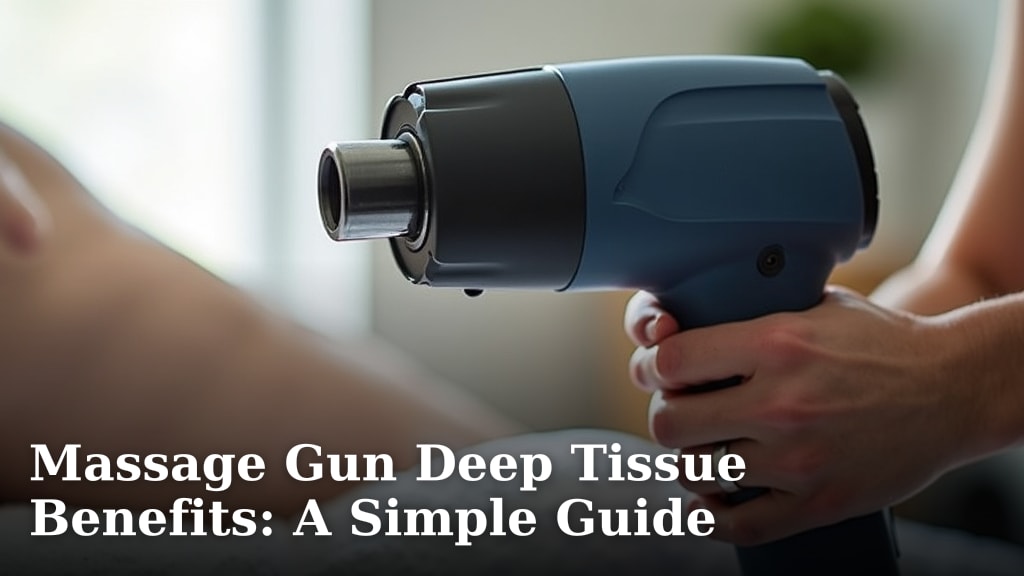
Massage guns provide deep tissue benefits by using percussive therapy to target tight muscles and improve circulation. This simple device sends rapid pulses deep into your tissue to release knots. It’s a straightforward way to relieve soreness at home.
Many people find relief after workouts or during long workdays with muscle tension. It feels like a deep massage you can control yourself. We found that consistent use can help with everyday aches and enhance your recovery.
- Relieves stubborn muscle knots and spasms
- Boosts blood flow to speed healing
- Eases post-exercise soreness naturally
- Offers a simple self-care routine
- Targets hard-to-reach areas like your back
Below, we’ll break down the specific advantages and how to use your massage gun safely. Let’s explore what this tool can really do for you.
How Percussive Therapy Targets Deep Tissue
A massage gun isn’t just a fancy vibrator. It uses percussive therapy, which means it delivers rapid, concentrated blows per minute. This mechanical force travels through your skin and into the deeper layers of muscle and fascia. The goal is to reach tissue that your hands might struggle to affect. It’s like having a tiny, powerful hammer working on a tight knot in your shoulder.
We found that this rapid percussion helps to relax the muscle spindle reflex. When a muscle is tight, it’s often in a state of spasm. The fast taps help “reset” this reflex, telling the muscle it’s safe to let go. This can lead to a direct release of tension you can feel immediately.
The Science of Increased Blood Flow
One of the most supported benefits is enhanced circulation. The percussive action acts like a pump for your circulatory system in the targeted area. As the head rapidly strikes the tissue, it helps push blood and oxygen-rich fluid into the muscle. Better blood flow means more nutrients and oxygen reach tired tissues.
According to the Mayo Clinic, improved circulation is a key factor in muscle recovery. It helps flush out metabolic waste products, like lactic acid, that can build up after exercise. This is why many people use a massage gun post-workout. It can help reduce the next-day soreness you feel.
Why This Matters for Your Recovery
Think of your muscle fibers like a sponge. When you exercise, they get compressed and filled with waste. The percussive force helps wring out that sponge, allowing fresh, clean fluid to rush back in. This process is a core part of the muscle repair cycle. A study in the Journal of Clinical and Diagnostic Research noted that percussion massage can improve range of motion and reduce delayed onset muscle soreness (DOMS).
Key Deep Tissue Benefits for Everyday Life
So, what does this all mean for you? The benefits translate into practical relief for common daily issues. It’s not just for athletes. Anyone dealing with tension from work, stress, or minor strains can find value here.
Many users report a significant reduction in chronic knots, especially in the neck, shoulders, and lower back. These are areas that hold stress from sitting at a desk or driving. The device allows you to apply consistent, targeted pressure without straining your own hands or wrists.
| Benefit | How It Helps You | Example Scenario |
|---|---|---|
| Pain Relief | Reduces perception of pain by stimulating sensory receptors. | Easing a stiff neck after a long day of computer work. |
| Increased Mobility | Releases tight fascia and muscle adhesions. | Getting a deeper, more comfortable stretch before yoga. |
| Stress Reduction | Triggers a relaxation response in the nervous system. | Unwinding before bed to promote better sleep. |
| Injury Prevention | Maintains tissue health and flexibility. | Keeping calves loose for regular walkers or joggers. |
Targeting Those Hard-to-Reach Spots
Ever tried to massage your own mid-back? It’s nearly impossible to get the right leverage. A massage gun with a long handle or a curved attachment solves this problem instantly. You can effectively treat the muscles along your spine or between your shoulder blades. This self-sufficiency is a huge plus for independence in your self-care routine.
Choosing the Right Massage Gun for the Job
Not all devices are created equal. For genuine deep tissue work, you need certain features. A toy with low power won’t penetrate deep enough. You should look for a device with adjustable speed or stall force. Stall force is how much pressure you can apply before the motor stops.
A stall force of at least 30-40 pounds is a good starting point for deep tissue work. Amplitude, or how far the head travels, is also important. A higher amplitude (12mm or more) creates a more powerful, penetrating sensation. It’s the difference between a tickle and a true deep massage.
Attachments Make a Difference
The head you put on the gun changes its effect. The round, foam ball is a versatile all-rounder for large muscle groups. For more targeted, intense work on a specific knot, a bullet or flat head is better. These concentrate the force into a smaller area. Always start with the broadest attachment and work your way to a more specific one if needed.
A Simple Guide to Using It Safely
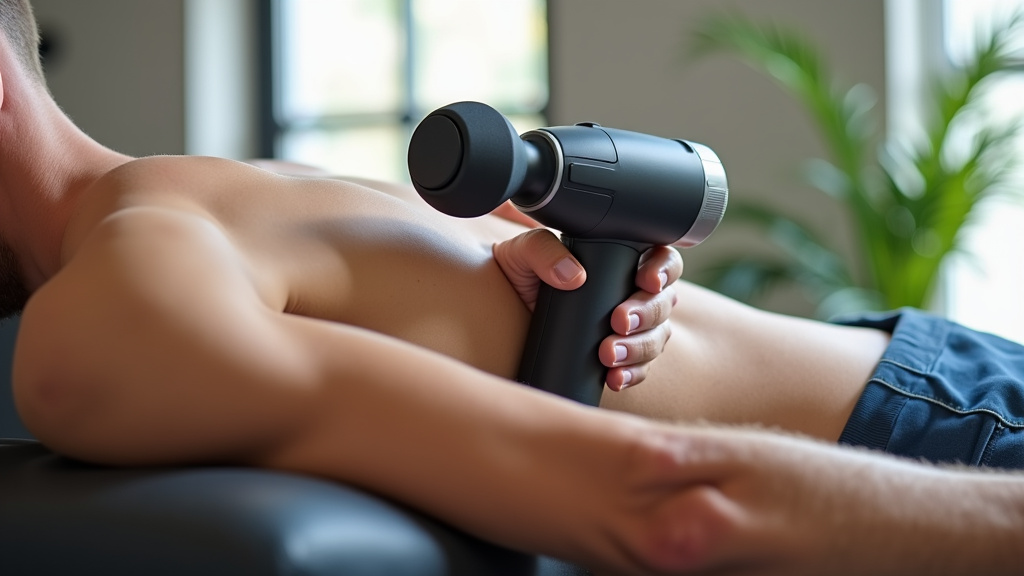
Safety is everything. This tool is powerful and must be used with respect. The golden rule is to keep it moving. Never press the head into one spot for too long, like a trigger point. Glide it slowly over the muscle belly. A good starting point is 30 to 60 seconds per muscle group.
You should never use a massage gun over bones, joints, or your neck’s front. The throat area contains important blood vessels and nerves. Avoid it completely. If you have any medical conditions like blood clots, pregnancy, or nerve damage, consult your doctor before use (Cleveland Clinic).
When to Pause and Listen to Your Body
Pain is your body’s alarm system. The sensation should be a “good hurt” or pressure, not sharp or electric pain. If something feels wrong, stop immediately. It’s also not a daily necessity for everyone. Using it 3-5 times per week on sore areas is plenty for most people. Your body needs rest to repair too.
Integrating It Into Your Routine
The best tool is the one you’ll actually use. Consistency matters more than marathon sessions. You might use it for 2 minutes on your calves after a walk. Or spend 5 minutes on your shoulders and back before bed. Make it a simple habit, like brushing your teeth.
Many experts suggest using it after a warm shower or light exercise. Your muscles are already warm and receptive. This can make the session more effective and comfortable. You can also use it as a pre-workout primer on tight areas to improve your range of motion.
Combining with Other Practices
A massage gun isn’t a magic bullet. It works best as part of a bigger picture. Combine it with regular stretching, hydration, and proper sleep. Think of it as one tool in your wellness toolbox, alongside good nutrition and movement. It complements, but doesn’t replace, other healthy habits.
Your Quick-Start Checklist
Ready to try it? Keep this simple guide handy.
- Start on a low setting. Let your body adapt to the sensation.
- Keep it moving. Glide the gun slowly; don’t press and hold.
- Avoid bones and joints. Focus on the fleshy muscle bellies only.
- Use the right attachment. Start with a round head for large areas.
- Listen to your body. Stop if you feel sharp pain or discomfort.
- Be consistent. Short, regular sessions beat occasional long ones.
Conclusion
A massage gun can be a straightforward addition to your self-care routine for addressing deep tissue tension. By using percussive therapy, it helps improve circulation, release muscle knots, and support recovery after activity or long days at a desk. Remember, the key is to use it safely and consistently—start on a low setting, keep the device moving, and focus on fleshy muscle areas.
Ready to experience the benefits? Begin with a short session of 2-3 minutes on your tightest spots, like your shoulders or calves. Combine this simple practice with regular stretching and hydration for the best results. Listen to your body, and you’ll find it can become a helpful part of staying comfortable and mobile.
Frequently Asked Questions
Can I use a massage gun on my neck?
Avoid using it on the front or sides of your neck where major blood vessels are located. You can gently use it on the muscular areas of your upper back and shoulders, but always start on the lowest speed. If you’re unsure, it’s best to skip the neck entirely.
How soon after a workout should I use my massage gun?
You can use it immediately post-workout to help reduce soreness, but allow your muscles to cool down slightly first. A few minutes after your routine is ideal. Focus on the muscles you targeted during exercise, using a gentle, sweeping motion.
Does a massage gun help with sciatica pain?
It may offer temporary relief by relaxing surrounding muscles, but it’s not a treatment for sciatica itself. Never use it directly on the spine or in a way that causes sharp pain. Consult a physical therapist or doctor for a proper diagnosis and treatment plan.
What is the stall force, and why does it matter?
Stall force is the amount of pressure you can apply before the device’s motor stops. For deep tissue benefits, look for a stall force of at least 30 pounds. This ensures the massage gun won’t stall when you apply firm pressure to reach deeper muscle layers.
Can children or elderly individuals use a massage gun?
Use caution and consult a healthcare provider before use. For children, the device is often too powerful, and for elderly individuals, it should be used on the lowest setting with very gentle pressure. Focus on large muscle groups and avoid bony areas.