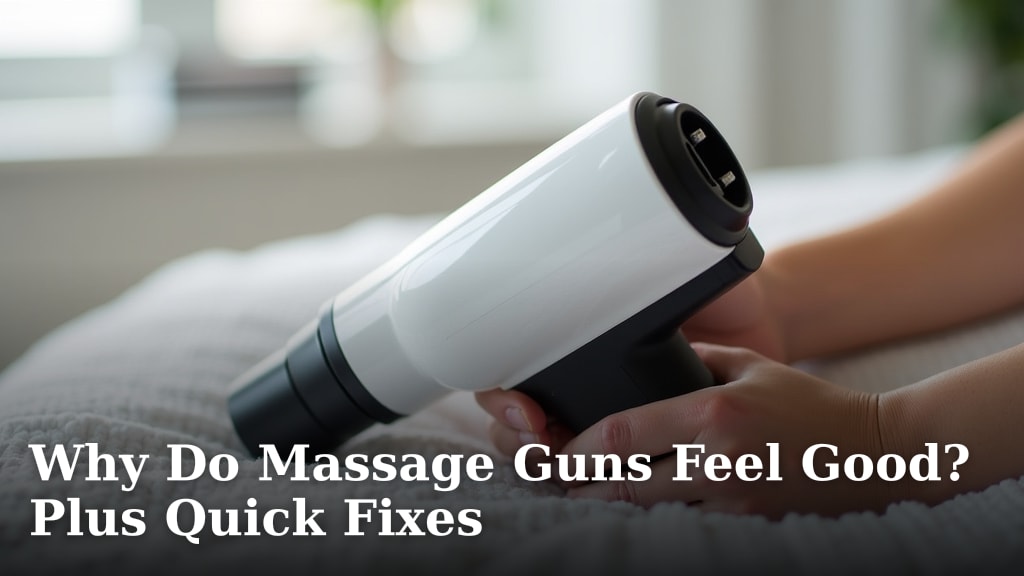
Why Do Massage Guns Feel Good? Plus Quick Fixes
The Science Behind Massage Guns Feeling So Good
A massage gun provides immediate, noticeable relief for sore muscles and tight spots. This feeling isn’t just in your head; it’s a mix of **neurological responses** and **physiological changes** happening in your body. We found that the rapid, rhythmic pressure targets your muscles and nervous system in a unique way.
How Percussive Therapy Works on Your Body
Most people call it percussive therapy. The device delivers rapid, focused pressure—much like a very fast, firm tap. This action works on several levels at once. It’s not magic, but the body’s reaction to this specific type of input is what creates that satisfying feeling.
Overloading the Pain Gate
Your body has a “gate” for pain signals traveling to the brain. When a massage gun presses into your skin, it creates a strong **sensory signal** that can temporarily overwhelm the pain pathway. Think of it like turning up the radio so loud you can’t hear the dripping faucet. The discomfort from a knot or strain gets muted (National Institutes of Health).
Increasing Blood Flow
The vibration and pressure help boost local blood circulation. More blood flow means more **oxygen and nutrients** reach the tired muscle tissue. It also helps carry away waste products like lactic acid that can build up after exercise. You’re essentially helping your muscles clean up and recover faster.
The Role of Your Nervous System
The feeling of relief is deeply connected to your nervous system. The massage gun acts as a strong, pleasant distraction. It stimulates receptors in your muscles and skin called proprioceptors. These receptors tell your brain about your body’s position and movement. This flood of new information can help reset the signals from a tight, painful area.
We often hear people describe it as a “reboot” for a tense muscle. The rhythmic tapping can also help shift your nervous system from a stressed state (sympathetic) to a more relaxed, resting state (parasympathetic). This is why you might feel calmer after a session.
Key Benefits You Can Feel Right Away
Beyond the science, what do you actually get from using a massage gun? The benefits are both immediate and long-term. Here’s what the research and countless users point to.
- Fast Muscle Recovery: It may help reduce delayed onset muscle soreness (DOMS) after a workout by improving circulation.
- Improved Range of Motion: Working on tight muscles and fascia can help you move more freely before or after activity.
- Stress and Tension Relief: Using it on your neck, shoulders, or back can provide a quick release from daily stress-induced tightness.
- Pain Management: For chronic issues like lower back pain or general stiffness, it can be a useful tool in your self-care routine (Mayo Clinic).
Not Just for Athletes
You don’t need to run marathons to benefit. Many people find it helpful for a **stiff neck** from working at a desk, lower back tightness from gardening, or general achiness after a long day of standing. It’s a versatile tool for everyday discomfort.
How to Get That “Feels Good” Feeling (Without Overdoing It)
Using the device correctly is key to getting the benefits without causing irritation. The goal is to feel relief, not pain. Always start with the lowest speed setting.
Where and How to Use It
Focus on the **fleshy, muscular parts** of your body. Avoid bony areas, your spine, neck arteries, and any injured or inflamed spots. Glide the gun slowly over the muscle, spending about 15-30 seconds on a tight area before moving on.
A Quick Session Guide
A good starting point is to treat each major muscle group for 1-2 minutes. This isn’t about staying in one spot for ten minutes. Think of it as giving your muscle a quick, effective tune-up. Less is often more when you’re starting out.
Common Mistakes That Kill the Good Feeling
Using it too much or in the wrong way can turn a helpful tool into a painful one. Here are the pitfalls to avoid.
Going Too Hard or Too Long
Pressing too firmly or using the highest speed immediately can cause soreness or even bruising. **Listen to your body**. The sensation should be “hurts so good,” not sharp or excruciating. If it hurts, you’re doing it wrong.
Using It on the Wrong Spots
Never use a massage gun directly on joints, bones, your spine, front/side of your neck, or over bruises and acute injuries. The device is for **muscles and soft tissue** only. Using it incorrectly can cause injury.
Quick Fixes for Common Massage Gun Questions
Got a specific issue? Here are fast solutions to make your experience better.
Fix: “It’s Too Loud for My Home.”
If noise is an issue, look for models with quieter brushless motors. Using it on a towel or blanket can also dampen the sound slightly. Some users wear headphones while using it for personal relaxation.
Fix: “I Feel Nothing on My Quads.”
You might need a firmer attachment head. Or, try relaxing the muscle completely. Sometimes tensing up during use blocks the sensation. Let the leg go limp and try again with a flat or ball-shaped head.
Fix: “It Made Me Cough.”
This is common when using it on your upper chest or back. The vibration can tickle or stimulate a cough reflex. Simply avoid those sensitive areas or use a much lower speed setting.
Your Quick-Start Checklist for a Great Massage
Follow these simple steps for a safe and satisfying session every time.
- Start on the **lowest speed** and a gentle attachment head.
- Focus on **large muscle groups** like calves, glutes, and upper back.
- Move the gun **continuously**—don’t hold it in one spot for more than 30 seconds.
- Listen to your body: **stop if it causes sharp pain**.
- Hydrate afterward to help your body process the metabolic waste.
- Clean the attachment heads with a disinfectant wipe after use.
When a Massage Gun Isn’t the Right Fix
While it’s a great tool, it’s not a cure-all. Sometimes, you need a different solution.
We found that for **acute injuries** (like a fresh strain or sprain), the R.I.C.E. method (Rest, Ice, Compression, Elevation) is better. For persistent, sharp pain, seeing a doctor or physical therapist is crucial. A massage gun is a helper, not a replacement for professional medical advice.
Talking to Your Body: Listen and Learn
Ultimately, why a massage gun feels good is a conversation between the device and your body. Your job is to be a good listener. Pay attention to how your muscles respond. Over time, you’ll learn exactly which speeds, attachments, and spots work best for you. It’s a personal toolkit for feeling better.
| Attachment Head | Best For | Feeling |
|---|---|---|
| Ball / Round | General use, large muscle groups | Diffuse, gentle pressure |
| Flat | Back, chest, broad areas | More intense, covering a wider area |
| Cone / Bullet | Deep tissue, trigger points (use with caution) | Very focused, intense pressure |
| Fork | Along the spine (on muscles beside it), Achilles tendon | Targets two parallel muscle groups |
Conclusion
So, why do massage guns feel so good? It’s a smart blend of science and sensation. The percussive action **overloads pain signals**, boosts **helpful blood flow**, and gives your nervous system a positive reset. You get fast relief from tightness and soreness, making it a handy tool for daily life and recovery. Remember, the magic is in using it correctly—start gentle, focus on muscles, and always listen to your body’s feedback. Your next step is simple: grab your device, select a large muscle group like your calf or shoulder, and try a 60-second session on the lowest speed. Pay attention to how that immediate relief feels.
Frequently Asked Questions
How often should I use a massage gun for pain relief?
For general muscle soreness, using it for 1-2 minutes per muscle group, **once or twice daily**, is a common guideline. It’s safe for regular maintenance, but you should give the same muscle group at least 48 hours of rest if you feel any deep soreness. Consistency with short sessions is better than long, infrequent ones.
Can using a massage gun on my neck help with headaches?
It might, especially for tension headaches originating in the upper traps and neck muscles. However, **never use it on the front or sides of your neck** where major arteries are. Gently work on the thick muscles at the base of your skull and upper shoulders on a low setting. If headaches persist, consult a doctor.
Why does my massage gun feel weaker over time?
The most common reason is a **low battery charge**. Always ensure it’s fully charged before use. If it still feels weak, check that the attachment head is locked in tightly. A loose connection can reduce power transfer. Finally, some motor wear can occur over many years of heavy use.
Is it normal to feel bruised after using a massage gun?
No, bruising is a sign you’re using **too much pressure or staying in one spot too long**. The goal is to feel relief, not to cause new injury. If you notice bruising, you need to reduce pressure, move the gun more constantly, and ensure you’re not targeting bony areas. Stop immediately if you feel sharp pain.
Can I use massage gun attachments on different people?
For hygiene reasons, it’s best to **clean the attachments thoroughly with a disinfectant wipe** between users. Some people prefer to have their own set of personal attachments. If someone has open wounds, skin infections, or contagious conditions, do not share the device or attachments at all.