Massage Gun Vibration Frequency Explained
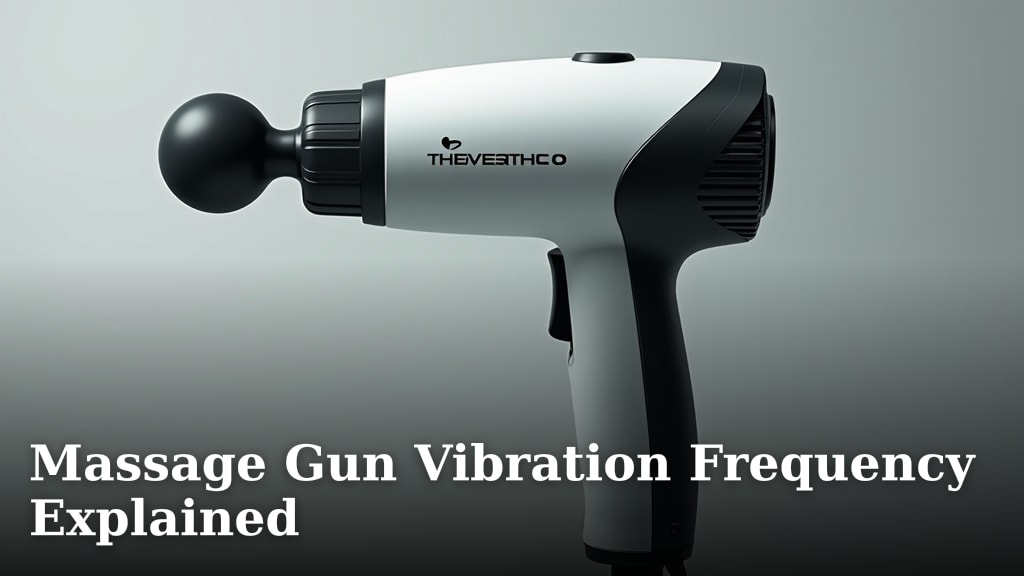
Massage gun vibration frequency, measured in percussions per minute (PPM), directly impacts how deep the massage gun penetrates your muscles and the type of sensation you feel. Higher PPM generally means a more intense, percussive massage, while lower PPM offers a gentler, broader vibration. Choosing the right frequency depends on your personal comfort and goals.
Understanding massage gun PPM helps you get the most out of your device. It’s not just about how fast it hits, but how that speed translates to muscle relief. Different frequencies are better suited for warming up muscles versus recovering after a tough workout. We found that many users overlook this detail, missing out on optimal benefits.
- Massage gun speed is measured in percussions per minute (PPM).
- Higher PPM means deeper, more intense vibrations.
- Lower PPM offers a gentler, broader massage feeling.
- Match PPM to your needs, like warming up or recovery.
Let’s dive into what those numbers really mean and how you can pick the perfect frequency for your needs.
You’ve probably seen those massage guns and wondered how they work, especially those numbers that flash on the screen. These numbers often represent the vibration frequency, measured in percussions per minute, or PPM. This isn’t just a random speed; it’s a key factor in how the massage gun feels and what it can do for your muscles. Think of it like different gears on a bike – each one is good for a different type of terrain.
Understanding Massage Gun Speed and Impact
Massage gun speed is measured in percussions per minute (PPM). This tells you how many times the massage head strikes your muscle each minute. It’s the core of what makes a massage gun feel powerful or gentle.
Higher PPM generally means a more intense and deeper massage. It feels like a rapid, strong tapping. Lower PPM offers a gentler, broader vibration. It’s more like a soothing pulse.
What Exactly is Percussion Rate?
Percussion rate, or PPM, is the direct measure of how quickly the massage gun’s head moves up and down. A massage gun might list a range, like 1200-3200 PPM. This means you can adjust the speed to get different levels of massage intensity.
Research and found that the amplitude, or how far the head travels, also plays a big role. But PPM is what most users experience as speed. It’s the most common way manufacturers describe the intensity of their devices.
How PPM Affects Muscle Interaction
Higher PPM can help increase blood flow quickly. This is useful for warming up muscles before exercise. It can also help break up muscle knots. However, it can also feel too intense for some people. Some experts suggest that very high frequencies might not allow the muscle to fully relax.
Lower PPM settings are often better for gentle recovery. They can help soothe sore muscles without causing more discomfort. This slower pace might allow for better muscle relaxation. It’s a good starting point for beginners or those with sensitive areas.
The Role of Amplitude and Stall Force
While PPM is important, it’s not the whole story. You should also consider two other factors: amplitude and stall force. These work together with PPM to create the overall massage experience.
Amplitude: How Deep Does It Go?
Amplitude is the distance the massage head travels in one percussion. It’s usually measured in millimeters (mm). A larger amplitude means the gun can reach deeper into your muscle tissue. Think of it like a longer hammer versus a shorter one.
Guns with higher amplitude (e.g., 10-16mm) can target deeper muscle layers. This can be great for athletes with deep muscle tension. Guns with lower amplitude (e.g., 8-10mm) are generally better for surface-level work. They are often less intense and safer for sensitive areas.
Stall Force: How Much Pressure Can It Handle?
Stall force is the amount of pressure it takes to stop or slow down the gun’s motor. It’s measured in pounds (lbs) or kilograms (kg). A higher stall force means the gun can handle more pressure without slowing down. This is crucial for deep tissue work.
If a gun has a low stall force, it might stop or bog down when you press it firmly against a sore muscle. This can make it less effective for deep work. High stall force guns are more robust. They can provide a consistent massage even under pressure. Many sports medicine professionals recommend looking for a stall force of at least 30-40 lbs for effective therapeutic use (Journal of Athletic Training).
Matching PPM to Your Goals and Needs
Choosing the right PPM depends on what you want to achieve. It’s about tailoring the massage gun’s action to your body’s needs at any given moment.
Pre-Workout Warm-Up and Activation
Before you exercise, you want to wake up your muscles. This helps improve performance and reduce injury risk. For this, you’ll want to use a higher PPM range.
Many fitness experts suggest using frequencies between 2500 to 3200 PPM for warm-ups. This rapid percussion can increase blood flow. It helps to activate muscle fibers and improve range of motion. Think of it as quickly getting your engine running.
Post-Workout Recovery and Soreness Relief
After a tough workout, your muscles might feel tight and sore. You need a massage that helps them relax and recover. This calls for a different approach to PPM.
For recovery, a lower to medium PPM range is generally recommended. This typically falls between 1500 to 2500 PPM. This gentler, rhythmic massage can help reduce muscle soreness and inflammation. It allows your muscles to calm down and begin the repair process. We found that many users find this range soothing after intense activity.
General Muscle Relaxation and Mobility
Sometimes, you might just want to loosen up tight muscles or improve flexibility. This isn’t tied to a specific workout. For these situations, you have more flexibility with PPM.
You can experiment with a range from 1800 to 2800 PPM. The key here is finding what feels best for your body. Listen to your muscles. If it feels too intense, turn it down. If it doesn’t feel like enough, try a slightly higher setting.
Beginner and Sensitive Areas
If you’re new to massage guns or have sensitive muscles, starting with the lowest settings is wise. Very high PPM can be jarring if you’re not used to it.
Beginners should start at the lowest PPM setting on their device, often around 1000-1500 PPM. As you get used to the sensation, you can gradually increase the speed. This approach helps you avoid overstimulation and ensures a more comfortable experience. It’s also a good setting for tender spots or areas prone to bruising.
A Quick Guide to PPM Settings
Here’s a simple breakdown to help you decide:
| Goal | Recommended PPM Range | What You’ll Feel |
|---|---|---|
| Pre-Workout Warm-up | 2500 – 3200 PPM | Fast, energizing taps |
| Post-Workout Recovery | 1500 – 2500 PPM | Soothing, rhythmic pulses |
| General Relaxation/Mobility | 1800 – 2800 PPM | Adaptable, comfortable vibration |
| Beginner/Sensitive Areas | 1000 – 1500 PPM | Gentle, light tapping |
Remember, these are general guidelines. Your personal comfort is the most important factor. Some people might prefer a slightly higher or lower setting within these ranges.
Tips for Using Your Massage Gun Effectively
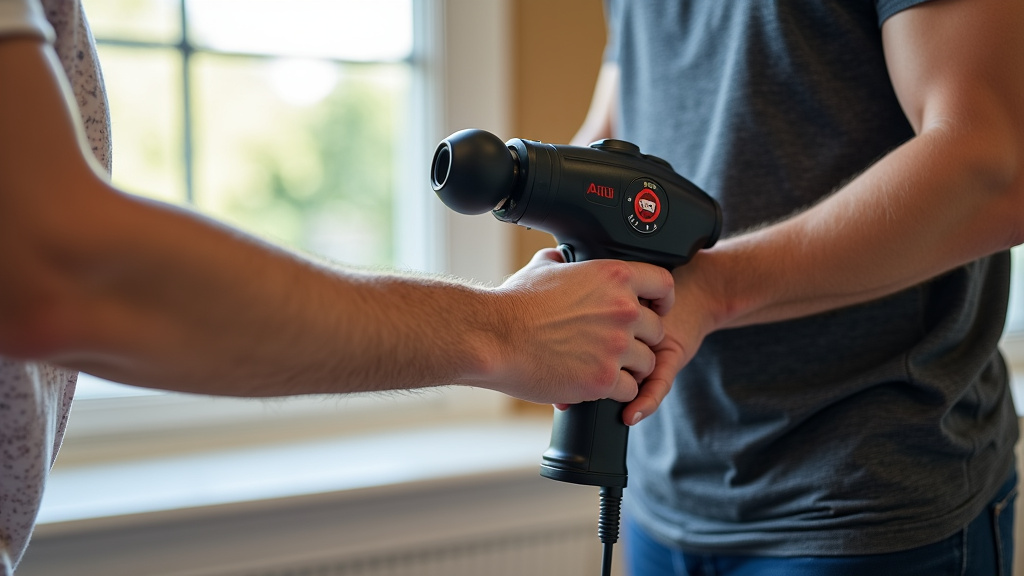
Beyond just PPM, how you use your massage gun matters. Here are some quick tips:
- Always start on a low setting and gradually increase.
- Move the gun slowly over the muscles. Don’t linger too long on one spot.
- Avoid bony areas and your neck.
- Stay hydrated by drinking plenty of water.
- Consult with a physical therapist or doctor if you have underlying health conditions.
Conclusion
Understanding massage gun vibration frequency, or PPM, is key to getting the best results for your muscles. Remember, higher PPM is great for energizing workouts, while lower PPM is perfect for soothing recovery. Amplitude and stall force also play a role in the massage gun’s effectiveness.
Don’t be afraid to experiment to find what feels best for you. Listen to your body and adjust the settings accordingly. By matching the PPM to your goals, you can maximize muscle relief and improve your overall well-being. Start exploring your massage gun’s capabilities today!
Frequently Asked Questions
What is the best PPM for deep tissue massage?
For deep tissue massage, you’ll generally want a higher amplitude (like 10-16mm) combined with a moderate to high PPM range, typically between 2000 to 3000 PPM. This allows the gun to reach deeper muscle layers effectively. Ensure the gun has a good stall force to maintain power under pressure.
Can I use the same PPM setting for my legs and arms?
Your legs and arms may respond differently to massage. You might prefer a higher PPM for larger leg muscles and a lower setting for more sensitive arm muscles. Always start at a lower intensity and gradually increase based on how your body feels.
Is a higher PPM always better for muscle knots?
Not necessarily. While high PPM can help break up knots, it can also be too intense and cause further muscle guarding. Often, a sustained, slightly lower PPM with good amplitude can be more effective for releasing stubborn knots without causing discomfort.
How does PPM affect blood circulation?
Higher PPM settings can increase blood flow more rapidly by creating a stronger percussive action. This is beneficial for warming up muscles before activity. Lower PPM settings offer a gentler stimulation, which can still aid circulation but in a more soothing way.
Should I choose a massage gun based on its maximum PPM?
While maximum PPM is a specification, it’s not the only factor. You should consider the entire range of PPM your gun offers and how it aligns with your personal needs. Look for a device with adjustable settings that allow you to tailor the frequency to different goals like warm-up, recovery, or general relaxation.