What Are Massage Gun Attachments For in Simple Terms?

Massage gun attachments are specialized heads designed to **target different muscle groups and areas** of your body. They let you **customize your massage experience** for better results. Think of them as different tools for different jobs, helping you get the most out of your massage gun. Attachments let you customize your massage gun for specific percussion massage gun benefits.
Choosing the right attachment can **make a big difference** in how effective your massage therapy is. Some are soft and broad, while others are small and firm. This variety means you can **address specific needs**, whether it’s a large muscle group or a tender spot. It’s all about finding the right fit for your body.
- Attachments customize your massage gun.
- Different heads target specific muscles and areas.
- They help you get better results.
- Choosing the right one is important.
- It makes your massage more effective.
Ready to learn how each attachment works? We’ll break down the common types and what they’re best used for, so you can pick the perfect one for your needs.
Understanding Your Massage Gun Attachments
So, you’ve got a massage gun, and it came with a bunch of different heads. Ever wonder what they’re all for? Think of them as the accessories that let you tailor your massage. Each one is designed to work on specific parts of your body. This helps you get a more focused and effective massage experience. Using the right attachment can make a big difference in how good you feel afterwards.
The Main Players: Common Massage Gun Attachment Types
Most massage guns come with a few standard attachments. These cover a wide range of needs. We’ll go over the most common ones you’ll find. Understanding their purpose will help you choose the best one for what ails you.
The Big Ball: Your Go-To for Large Muscles
This is usually the largest attachment. It’s often made of a soft foam or a firm rubber. Its broad surface area is perfect for hitting big muscle groups. Think of your quads, hamstrings, and lats. It delivers a general, widespread massage. The large ball attachment is great for general soreness and can help with massage gun deep tissue benefits.
Why it’s great: It’s a good starting point. It covers a lot of ground quickly. Many people find it comfortable for general soreness. It helps to increase blood flow to large areas.
The Bullet: For Precision Targeting
This attachment is small and pointed, like a bullet. It’s designed for very specific, small muscle areas. It can also target trigger points. Trigger points are those tight knots in your muscles that can cause pain. This head delivers a concentrated force.
Use with caution: Because it’s so focused, it can feel intense. We recommend using it on a lower speed setting. It’s best for areas like the sole of your foot or a specific spot on your calf. Experts suggest using it carefully to avoid over-stimulating an area (Cleveland Clinic).
The Fork: Great for Muscles Along the Spine
The fork-shaped attachment, also called a dual-prong head, is designed to work around bony areas. It’s perfect for massaging the muscles on either side of your spine. It can also be used on your traps or calves. The two prongs straddle bony structures.
Helps you avoid bone: This shape allows you to massage the muscle tissue without directly hitting the bone. This is safer and more comfortable. It’s a smart choice for your neck and upper back.
The Flat Head: Versatile for Many Areas
This is another common and versatile attachment. It’s a flat, often slightly curved surface. It can be used on a variety of muscle groups. It’s good for both large and medium-sized muscles. It provides a less intense, more generalized pressure than the ball.
A solid all-rounder: Many people use this one for their chest, arms, and even glutes. It offers a good balance between pressure and coverage. It’s a safe bet when you’re not sure which attachment to use.
Less Common, But Still Useful Attachments
Beyond the basics, some massage guns come with more specialized heads. These can be great for specific issues or preferences. If your gun has these, they can offer even more ways to customize your therapy.
The Cushion/Air-Cushioned Head: For Extra Gentleness
This type of attachment is usually made of a softer material. It might feel like it has a little give, almost like an air cushion. It delivers a much gentler massage. It’s ideal for sensitive areas or for people who prefer a lighter touch.
For sensitive spots: You might use this on areas that are bruised or extra sore. It can also be good for working on scar tissue. It provides comfort while still stimulating blood flow.
The Finger/Thumb-Shaped Head: For Deeper Pressure
Some attachments are designed to mimic the shape of a thumb or finger. They provide a more direct and focused pressure. They can be useful for digging into smaller, tight muscle areas. Think of the arch of your foot or the muscles in your hand.
Mimics manual therapy: This attachment can feel like a therapist’s thumb or finger working into a knot. Use it carefully, as it can deliver quite intense pressure. Start on a low setting to gauge your comfort level.
How to Choose the Right Attachment for You
Deciding which attachment to use comes down to a few simple factors. It’s about the size of the muscle group and the intensity you’re looking for. Don’t be afraid to experiment. You’ll quickly learn what feels best for your body.
Consider the Muscle Group Size
Large muscles: For broad areas like your thighs or back, the large ball or flat head are usually best. They cover more surface area. This helps you get a good massage quickly.
Smaller muscles: For areas like your forearms, calves, or even your feet, the flat head or even the bullet (with care) can be effective. The fork is good for the muscles alongside your spine.
Think About the Intensity You Need
Are you just looking for some general relaxation? A large ball or flat head on a lower setting might be perfect. Do you have a really tight knot or a specific sore spot?
A bullet or finger-shaped head might be more appropriate. Remember, you can always increase the speed or intensity. But it’s harder to undo too much pressure. We found starting on the lowest setting is always a smart move.
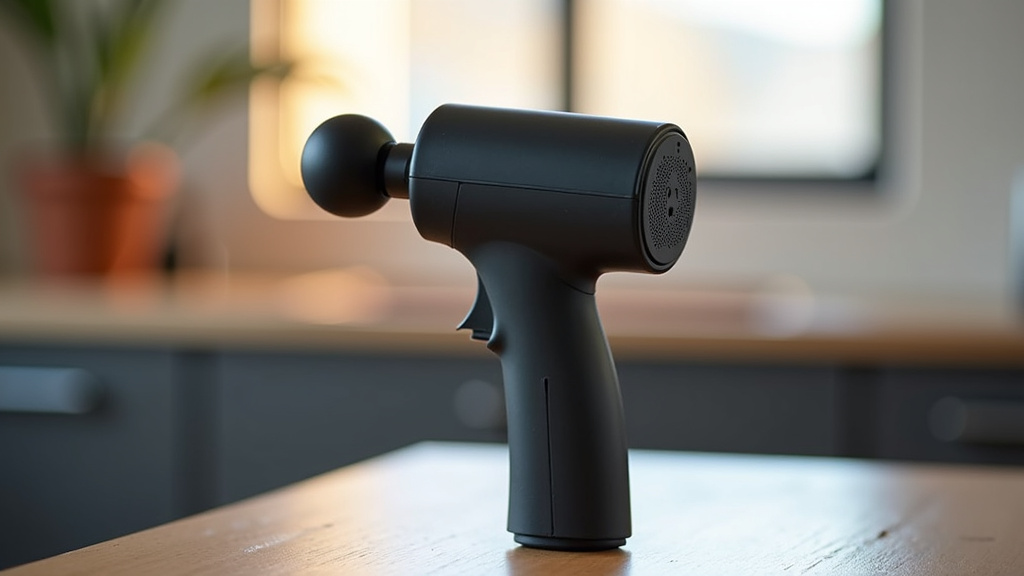
Putting Your Attachments to Work: A Quick Guide
Here’s a simple way to think about matching attachments to your needs:
- Muscle Soreness: Start with the large ball for overall relief.
- Tight Knots: Try the bullet or finger head on low speed.
- Neck & Upper Back: The fork attachment is often ideal.
- General Use: The flat head is a reliable choice.
- Sensitive Areas: The cushion head provides gentle relief.
A Simple Comparison Table
Here’s a quick look at what each attachment is generally best for. This can help you make a quick decision.
| Attachment Type | Best For | Notes |
|---|---|---|
| Large Ball | Large muscle groups (quads, hamstrings, lats) | General massage, increased blood flow. |
| Bullet | Trigger points, small precise areas (feet, specific knots) | Intense, focused pressure. Use with caution. |
| Fork (Dual-Prong) | Muscles along the spine, traps, calves | Avoids direct bone contact. |
| Flat Head | Versatile, medium to large muscles (chest, arms, glutes) | Balanced pressure and coverage. Good all-rounder. |
| Cushion/Air | Sensitive areas, bruises, scar tissue | Gentle massage, extra comfort. |
| Finger/Thumb | Deep tissue work on small, tight areas | Mimics manual therapy. Can be intense. |
Using the right attachment can truly enhance your massage gun experience. It allows you to address your specific needs more effectively. Don’t feel overwhelmed; start with the basics and see how they feel. Your body will thank you!
Conclusion
You now understand how massage gun attachments are designed to personalize your recovery. Each head serves a distinct purpose, from working large muscle groups with the ball to targeting tight knots with the bullet. By matching the right attachment to the area you’re treating, you can make your massage sessions more effective and comfortable. Don’t be afraid to experiment with different heads and speeds. Pay attention to how your body responds to find what works best for you and your specific needs.
Frequently Asked Questions
Can I use any massage gun attachment on any part of my body?
While many attachments are versatile, it’s best to use them appropriately. For instance, a narrow bullet head is not ideal for large muscle groups. Always consider the size of the muscle and the intensity you want. Sticking to recommended uses ensures a safer and more effective massage.
How do I know if I’m using the right intensity with an attachment?
You should feel a therapeutic sensation, not sharp pain. Start with the lowest speed setting on your massage gun. If an attachment feels too intense, even on low, switch to a softer or larger head. Your comfort is the best guide.
What’s the best attachment for sore muscles after a workout?
For general soreness after exercise, the large ball attachment is often recommended. Its broad surface area helps increase blood flow to large muscle groups without being overly intense. The flat head is also a good general-purpose option for muscle relief.
Can massage gun attachments help with neck pain?
Yes, but with caution. The fork or dual-prong attachment is designed to work around the neck muscles safely. Avoid direct pressure on your spine or bone. Always use a low setting and focus on the muscles on either side of your neck.
How often should I switch massage gun attachments?
You might switch attachments multiple times within a single massage session. For example, you might start with a large ball for overall muscle engagement, then switch to a bullet head for a specific tight spot. It depends on the different areas you are treating and their needs.