What Attachment Is Used for Trigger Points?
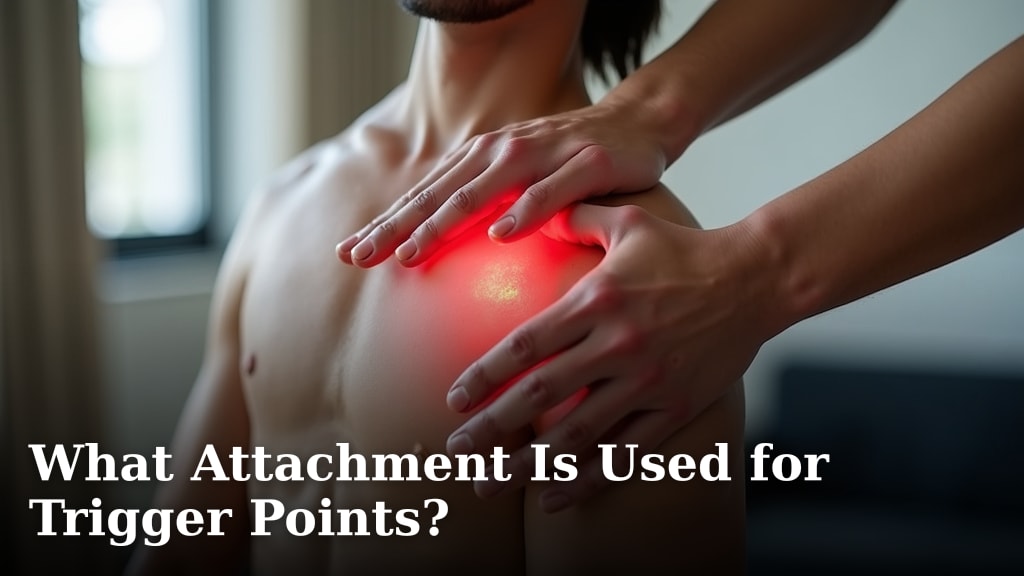
Attachments for trigger points are tools used to apply targeted pressure to tight knots in your muscles. These attachments often come with massage guns or other percussive therapy devices. They help you reach deeper into muscles and provide a more precise massage for pain relief.
Finding the right attachment can make a big difference in how you manage muscle soreness. Different shapes and firmness levels are designed for various muscle groups and pain levels. Many people find these tools helpful for addressing stubborn knots and improving muscle recovery.
- Trigger point attachments apply focused pressure.
- They are often used with massage guns.
- Different attachments suit different muscles.
- They can help relieve muscle knots and pain.
Let’s look at the common types of attachments you’ll find and how each one works to help you find the best relief for your aches.
Understanding Trigger Point Attachments
When you’re dealing with those stubborn, painful knots in your muscles, the right tool can make all the difference. Trigger point attachments are designed to give you precise control. They allow you to target those tight spots with focused pressure. Many people find these attachments essential for muscle recovery and pain relief.
Think of them like specialized tools in a toolbox. Just as you wouldn’t use a hammer to screw in a nail, you wouldn’t use every attachment for every muscle. We’ll help you understand which ones are best suited for your needs.
Common Trigger Point Attachment Types and Their Uses
The Ball Attachment
This is often your go-to attachment for general use. Its rounded shape makes it versatile. You can use it on large muscle groups like your quads, hamstrings, and glutes. It provides broad pressure. This helps to warm up muscles before a workout or soothe soreness afterward.
The ball attachment is great for covering more surface area. It’s a good starting point if you’re new to percussive therapy. Many find it comfortable. It’s less intense than some other specialized tips. We found it to be a reliable choice for general muscle tension.
When to Use the Ball Attachment
- Large muscle groups (thighs, calves, back)
- General muscle soreness
- Warming up muscles before activity
- Post-workout recovery
The Bullet Attachment
This attachment is all about precision. Its small, pointed tip is designed to target very specific areas. Think of it like a laser pointer for your muscles. It’s perfect for hitting those small, deep trigger points that cause sharp pain. You can use it on areas like the sole of your foot or the muscles in your hand.
Because it’s so focused, it can feel intense. Start with low intensity and short durations. You might feel a strong sensation. That’s normal as it works on those tiny, contracted muscle fibers. Research suggests that precise pressure can help release these knots (NCBI).
When to Use the Bullet Attachment
- Small, specific knots
- Deep trigger points
- Plantar fasciitis
- Muscles in hands and feet
- Areas with tight fascia
The Flat Head Attachment
Similar to the ball, the flat head offers a broader surface area. However, it’s much firmer. This makes it excellent for areas where you need more direct force. It’s good for muscles that are dense or very tight. Think of your pecs, lats, or even some areas of your thighs.
It provides a good balance between pressure and coverage. You can apply a solid amount of force without the intense pinpoint sensation of the bullet. Many users prefer it for working on their back muscles. It’s a versatile option for moderate to deep tissue work.
When to Use the Flat Head Attachment
- Dense muscles (chest, back, quads)
- Moderate to deep pressure
- When the ball feels too soft
- General muscle relief
The Fork (or Spine) Attachment
This attachment is unique. It has a U-shape, often with two rounded ends. Its primary purpose is to work along the sides of bones or the spine. It allows you to massage muscles adjacent to these areas without directly pressing on the bone itself. It’s particularly useful for the muscles along your spine or your shins.
You can also use it to gently work around larger joints. It helps to release tension in those supporting muscles. This attachment is designed for safer, more targeted work in sensitive areas. We found it to be very effective for relieving tension along the trapezius muscles.
When to Use the Fork Attachment
- Muscles along the spine
- Calf muscles (shin splints)
- Neck muscles (carefully)
- Around joints
The Air Cushion (or Soft) Attachment
If you’re sensitive to pressure or just starting out, this might be your best friend. These attachments are typically made of softer foam or have a cushioned design. They provide a gentler, diffused massage. It’s like a softer version of the ball attachment.
They are ideal for sensitive areas or for individuals who experience pain easily. Think of areas like your ribs, shins, or even your feet if they are very tender. This attachment helps improve circulation without causing discomfort. It’s a great way to introduce yourself to percussive therapy. Many find it provides a soothing sensation.
When to Use the Air Cushion Attachment
- Very sensitive muscles
- Bony areas (with caution)
- Beginners to percussive therapy
- Improving circulation gently
- Areas prone to bruising
Choosing the Right Attachment for Your Needs
Selecting the correct attachment depends on a few factors. First, consider what part of your body you’re targeting. Larger, flatter muscles like your quads can handle broader attachments. Smaller, more specific knots might need the precision of a bullet.
Second, think about the intensity of your pain. If you have deep, sharp pain, start with a softer attachment and gradually work up. If you have general soreness, a ball or flat head might be perfect. It’s also about personal preference. What feels good to one person might not feel the same to another.
We found that experimenting is key. Try different attachments on the same muscle group. See which one gives you the best relief. Sometimes, using a combination of attachments can be very effective. For example, you might start with a ball to warm up a large area, then use a bullet for a particularly stubborn knot.
Tips for Using Trigger Point Attachments Safely
Using these attachments correctly is essential for getting relief without causing harm. Always start with the lowest speed and intensity setting on your device. Let the attachment do the work; you don’t need to press down hard.
Move the attachment slowly and deliberately over the muscle. Avoid staying on one spot for too long, especially with intense attachments like the bullet. Generally, 30-60 seconds per muscle area is a good guideline. If you feel sharp pain, stop immediately. It’s also wise to avoid using them directly on bones or joints. Always read your device’s manual for specific safety instructions.
Many health professionals recommend staying hydrated and stretching after use. This helps your muscles recover. The Mayo Clinic suggests that proper recovery techniques can enhance the benefits of massage therapy.
When to Consult a Professional
While trigger point attachments are great for self-care, they aren’t a magic bullet for all pain. If you have persistent pain, pain that worsens, or pain accompanied by other symptoms like numbness or tingling, it’s time to see a doctor or physical therapist. They can help diagnose the cause of your pain.
A professional can also guide you on the best way to use your percussive therapy device. They might show you specific techniques or recommend certain attachments for your condition. They can help ensure you’re addressing the root cause of your discomfort effectively.
Here’s a quick checklist to remember:
- Start with softer attachments if you’re new or sensitive.
- Use precise attachments (like the bullet) for specific knots.
- Use broader attachments (ball, flat head) for larger muscles.
- Always start on a low setting and increase slowly.
- Move the attachment; don’t hold it in one spot too long.
- Listen to your body and stop if you feel sharp pain.
Conclusion
You’ve learned that trigger point attachments are your allies in tackling muscle knots. We’ve seen how the ball offers general relief, the bullet targets precise spots, the flat head provides firm pressure, the fork works around bones, and the air cushion offers gentle comfort. Choosing the right one means considering your body’s needs and your personal comfort level. Don’t be afraid to experiment to find what works best for you. Start with the simplest attachment and lower settings, always listening to your body. Your next step is to try out the attachment that seems most suited to your current muscle soreness and see the difference it makes in your recovery.
Frequently Asked Questions
Which attachment is best for deep muscle knots?
For deep muscle knots, the bullet attachment is often recommended due to its precise, concentrated pressure. However, it can feel intense, so always start with a low setting. If the bullet feels too sharp, a flat head attachment on a moderate setting can also work well for deeper tissue.
Can I use trigger point attachments on my neck?
Yes, but with extreme caution. For neck muscles, we found the fork (or spine) attachment can be useful for working along the sides of the spine. Always use the lowest speed and intensity. If you have any neck pain or concerns, consult a healthcare professional first.
How long should I use an attachment on one spot?
It’s best not to stay on one spot for too long, especially with more intense attachments. Generally, we found that 30-60 seconds per muscle area is sufficient. Moving the attachment slowly across the muscle is more effective than holding it still.
What if an attachment feels too painful?
If an attachment causes sharp or significant pain, stop immediately. You might be using it on a very sensitive spot, or the intensity is too high. Try switching to a softer attachment like the air cushion or ball, or reduce the speed and pressure significantly.
Are trigger point attachments safe for bony areas?
You should avoid using trigger point attachments directly on bones. Some softer attachments, like the air cushion, can be used carefully around bony areas like the shin, but always with very low intensity. The fork attachment is designed to work alongside bones, not directly on them.