What Makes a Massage Gun Ergonomic: A Simple Guide?
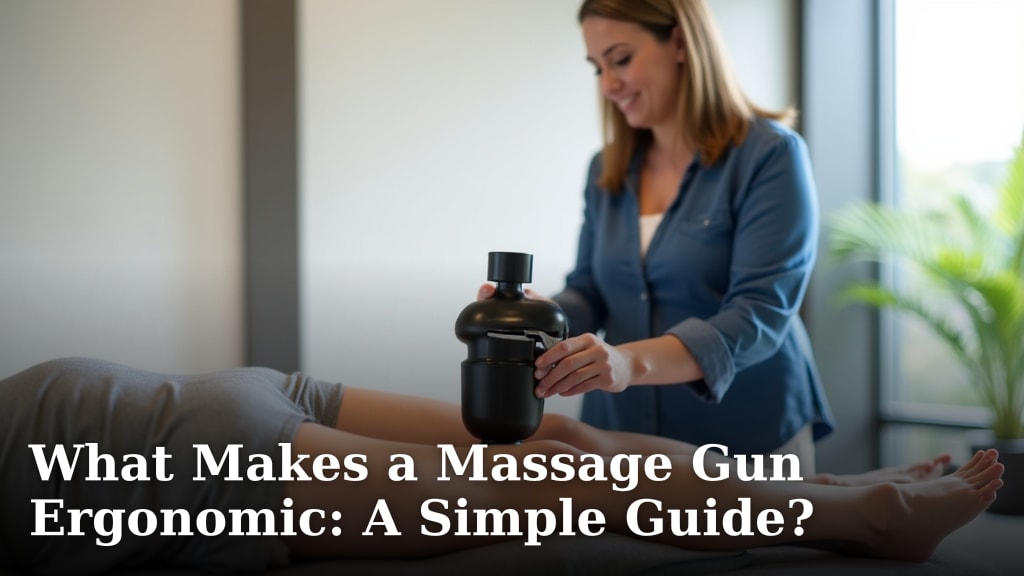
What makes a massage gun ergonomic really comes down to how it feels in your hand. An ergonomic massage gun is designed to be **comfortable to hold and use** for extended periods. It should feel like a natural extension of your arm, minimizing strain on your wrist and hand. This design focus is key to **preventing fatigue** and making your recovery sessions more effective.
When you’re looking at massage guns, think about the shape and weight. A good ergonomic design means the gun won’t feel too heavy or unbalanced in your grip. You want to be able to reach different muscle groups without awkward wrist angles. This careful balance is what separates a truly **user-friendly massage gun** from one that might leave you feeling sore in new places.
- Ergonomic means comfortable to hold and use.
- It feels like a natural extension of your arm.
- It minimizes strain on your wrist and hand.
- Weight and balance are important design factors.
- It allows you to reach muscles easily.
Below, we’ll break down the key features that make a massage gun feel good in your hand and work well for your muscles.
You’ve already learned that an ergonomic massage gun just feels *right* in your hand. It’s not fighting you; it’s working with you. But what exactly makes it feel that way? It’s a combination of design choices that impact how you hold it, how much effort you put in, and how effectively you can target those sore spots. Let’s break down the key elements that contribute to a truly ergonomic massage gun experience.
Key Design Features for a Comfortable Massage Gun
When you’re looking for a massage gun that won’t leave your hand aching, pay attention to its physical design. These features directly impact how it feels and performs during your recovery sessions.
Weight and Balance: The Foundation of Comfort
Think about holding any tool. If it’s too heavy or the weight is all in the wrong place, it’s going to be tiring. The same is true for massage guns. A good ergonomic gun feels balanced in your hand. You shouldn’t feel like you’re constantly fighting gravity or straining your wrist to keep it stable.
Many manufacturers aim for a weight distribution that centers the mass closer to your grip. This makes the gun feel lighter and easier to maneuver. For instance, research on hand-intensive tasks suggests that a well-balanced tool can reduce muscular effort and fatigue (Liberty Mutual).
So, when you pick up a massage gun, give it a gentle tilt. Does it feel like it wants to tip forward or backward? Does it feel like a dumbbell in your hand? If so, it might not be the best choice for comfort. You’re looking for something that feels natural to hold, like an extension of your own arm.
Grip Design: Where Your Hand Meets the Machine
The part you hold onto is incredibly important. An ergonomic grip isn’t just about how it looks; it’s about how it feels against your skin and how it prevents slipping.
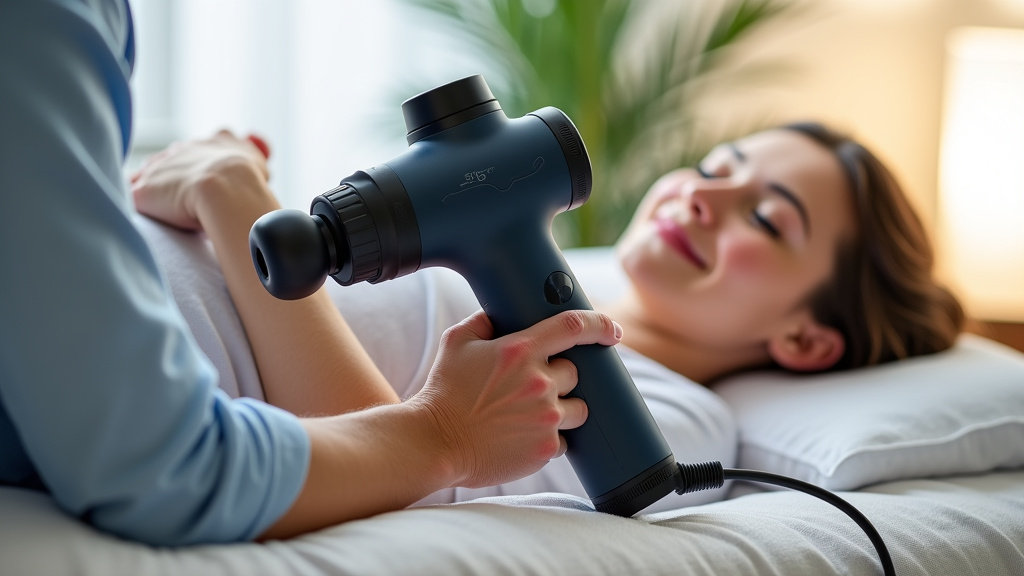
Some massage guns have smooth, hard plastic grips. After a few minutes, your hand might start to feel a bit slick or uncomfortable. Others feature textured materials, like rubberized coatings or strategically placed indentations. These textures give you a more secure hold, even if your hands get a little sweaty. This is key to maintaining control and preventing accidental slips.
We’ve found that grips designed with a slight contour, to match the natural curve of your palm and fingers, make a big difference. They reduce the need to grip tightly, which can prevent hand and finger fatigue. It’s like the difference between holding a smooth, round stick versus a pen with a comfortable grip – one is much easier to hold for longer periods.
Handle Shape and Length
The shape and length of the handle also play a role. A handle that’s too short might force your fingers into an awkward bunching position. Conversely, a handle that’s excessively long can feel cumbersome.
Many experts suggest that a handle length allowing for a full hand grip, with a little room to spare, offers the best control and comfort. The shape should ideally allow you to position your hand in a relaxed way, without extreme bending of your wrist.
Attachment Variety and Ease of Use
While not directly about *holding* the gun, the ease with which you can switch attachments is part of the overall ergonomic experience. You don’t want to struggle to pop off one head and push on another.
Many modern massage guns use a simple push-and-click system for attachments. This means you can change them quickly and easily with minimal force. This is important because you’ll likely be switching between different heads to target various muscle groups. A fiddly attachment system can be frustrating and break the flow of your recovery session.
How Ergonomics Impacts Your Recovery Sessions
So, why should you care so much about these design details? Because good ergonomics directly translates to better results and a more positive experience with your massage gun.
Reduced Strain and Fatigue
When a massage gun is well-balanced and comfortable to hold, your body doesn’t have to work as hard. This means less strain on your wrists, elbows, and even your shoulders. You can use the device for its intended duration without your hand or arm tiring out before your muscles do.
Research into workplace ergonomics consistently shows that reducing physical strain leads to less fatigue and improved performance over time (Occupational Safety and Health Administration). The same principles apply to your personal recovery tools.
Imagine trying to hold a heavy book open with one hand for an hour. It’s tiring. Now imagine holding it with a comfortable stand. The difference in effort is huge. A well-designed massage gun feels more like that stand.
Better Reach and Targeting
An ergonomic design also considers how you’ll use the gun to reach different parts of your body. The shape of the handle, its length, and the overall balance can affect your ability to maneuver the gun at various angles.
Can you easily reach your upper back or the back of your legs without contorting your wrist awkwardly? Some massage guns have angled handles or longer shafts that help you access harder-to-reach areas more effectively. This means you can provide therapeutic percussive massage to more of your body without undue stress on your joints.
Think about trying to paint a wall with a brush that has a really short handle versus one with a longer one. The longer handle lets you keep your arm straighter and reach further without straining your shoulder or elbow. Massage guns are similar.
Increased Usability and Consistency
When a massage gun feels good to use, you’re more likely to use it regularly. An uncomfortable or difficult-to-handle device might end up gathering dust. Consistency is key for recovery and muscle health. A user-friendly design encourages that consistency.
You want your massage gun to be a tool you reach for, not one you dread picking up. Ease of use contributes directly to how often and how effectively you can incorporate it into your routine. This makes your investment more worthwhile and your recovery efforts more productive.
Factors Affecting Ergonomics: What to Look For
Let’s summarize the key ergonomic features to check when you’re shopping. This checklist can help you make a confident choice.
| Feature | What to Look For | Why It Matters |
|---|---|---|
| Weight | Balanced, not too heavy. Feels controllable. | Prevents arm and wrist fatigue. |
| Grip | Textured, comfortable material. Contoured shape. | Secure hold, reduces slippage and hand strain. |
| Handle Design | Appropriate length and shape for your hand. | Allows relaxed grip and easy maneuvering. |
| Angle of Head | Allows comfortable angles for targeting muscles. | Helps reach difficult areas without awkward wrist bends. |
| Attachment System | Easy to swap heads quickly. | Maintains flow and prevents frustration. |
Putting It All Together: Your Ergonomic Checklist
Here’s a quick rundown of what you should consider:
- Does it feel balanced in your hand?
- Is the grip comfortable and non-slip?
- Can you hold it for several minutes without discomfort?
- Does the handle shape allow for a relaxed grip?
- Is it easy to maneuver to reach different body parts?
- Can you change attachments without a struggle?
Conclusion
Choosing an ergonomic massage gun means you’re investing in comfort and effectiveness. You learned that good ergonomics isn’t just about looks; it’s about how the gun’s weight, balance, and grip reduce strain on your hand and wrist. This careful design allows for better reach and control, making your recovery sessions more productive and enjoyable. Don’t overlook these features when shopping. Your next step is to try holding a few different models to see what feels best for your hand. This simple step can make a big difference in your recovery routine.
Frequently Asked Questions
How much should a good ergonomic massage gun weigh?
An ergonomic massage gun typically weighs between 1 to 3 pounds. The key isn’t just the total weight, but how well that weight is distributed. You want it to feel balanced in your hand, not top-heavy or like a strain to hold up.
Are textured grips really that important for a massage gun?
Yes, textured grips are quite important for ergonomics. They provide a more secure hold, reducing the chance of slipping, especially if your hands get sweaty. This secure grip means you don’t have to squeeze as hard, which helps prevent hand fatigue during longer use.
Can the handle shape of a massage gun affect my comfort?
Absolutely. A well-designed handle shape supports the natural curve of your hand. This allows for a relaxed grip and makes it easier to maneuver the gun to target different muscle groups without awkward wrist bending or finger strain.
What’s the best way to test if a massage gun is ergonomic before buying?
The best way is to hold it. See how it feels in your hand. Try tilting it to check the balance and grip it for a minute or two. Imagine using it on different parts of your body to see if you can reach them comfortably.
Does handle length matter for massage gun ergonomics?
Handle length does matter. A handle that’s too short can make your fingers bunch up uncomfortably. A good length allows for a full, relaxed grip and helps you reach areas like your upper back or glutes without overextending your arm or wrist.