What Is a Handheld Percussion Massager, and What to Know?
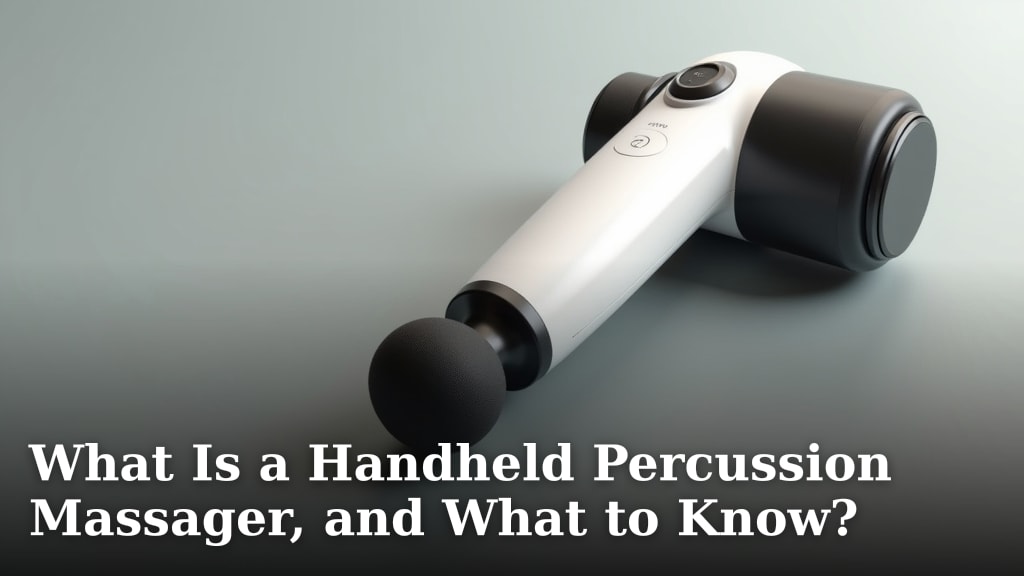
A handheld percussion massager is a powerful, portable device that uses rapid pulses to relieve muscle tension and soreness. Think of it as a personal massage therapist you can take anywhere. It works by delivering quick, thumping motions deep into your muscles, helping to boost blood flow and reduce knots.
Many people find these massagers helpful for post-workout recovery or just for unwinding after a long day. The different attachments allow you to target specific muscle groups. We found that they are becoming increasingly popular for at-home muscle care. They offer a convenient way to manage aches and pains.
- Handheld percussion massagers are portable devices for muscle relief.
- They use rapid pulses to ease tension and improve blood flow.
- Different attachments can target specific muscle areas.
- They are popular for workout recovery and general relaxation.
Ready to learn more about how these handy tools can help you feel better? Let’s dive into what you should know about handheld percussion massagers.
Understanding Handheld Percussion Massagers: What They Are and How They Work
So, what exactly is a handheld percussion massager? Think of it as a high-tech massage tool designed for your home. It’s a device you hold in your hand that delivers rapid, percussive strokes. These strokes are often described as a series of quick taps or thumps. They go deep into your muscle tissue. This action helps to break up tension and soreness.
The science behind it is pretty straightforward. The rapid pulsing action increases blood flow to the targeted area. This enhanced circulation helps deliver oxygen and nutrients to your muscles. It also aids in flushing out metabolic waste products. These are things like lactic acid that can build up after exercise. Many people find this helps them recover faster. It also just feels good after a long day!
How the Percussion Action Relieves Muscle Tightness
The rapid, **deep-hitting motion** is key. It’s different from a gentle massage. Percussion massagers can reach deeper muscle layers. This can be especially helpful for stubborn knots or areas that feel particularly tight. Research suggests that percussive therapy can help to reduce muscle stiffness. It can also increase range of motion. This is why athletes often use them.
Imagine your muscles are like a tangled ball of yarn. A gentle rub might smooth the surface. A percussion massager, however, helps to loosen those tight tangles from within. This can lead to a feeling of greater freedom and less discomfort in your muscles. It’s a targeted approach to muscle relief.
The Benefits You Can Expect from Using a Percussion Massager
Using a handheld percussion massager regularly can offer several benefits. These devices are designed to address common muscle issues many of us face. They are becoming a popular choice for self-care. Let’s look at some of the key advantages you might experience.
Muscle Soreness and Recovery
This is perhaps the most well-known benefit. After a strenuous workout, your muscles can feel sore. This is often called delayed onset muscle soreness, or DOMS. Percussion massagers can help alleviate this post-exercise discomfort. By increasing blood flow, they assist your muscles in their repair process.
We found that many users report feeling less sore for shorter periods after using a percussion massager. It’s like giving your muscles a jump-start in their recovery. Some studies suggest that percussive therapy can also help prevent future muscle injuries. This is by keeping muscles more pliable and ready for activity (Journal of Strength and Conditioning Research).
Improved Blood Circulation
As mentioned, the pulsating action is great for circulation. Better blood flow means your muscles get more of what they need to function well. Think of it as opening up traffic jams in your body. When blood moves freely, it can deliver oxygen and nutrients more efficiently. This is essential for overall muscle health.
When muscles receive adequate blood supply, they can recover faster and perform better. This boost in circulation can also help reduce inflammation. This is another factor that contributes to muscle soreness and stiffness. So, better circulation leads to happier, healthier muscles.
Reduced Muscle Tension and Stress Relief
Life can be stressful. And that stress often shows up as tight muscles, especially in your neck, shoulders, and back. A percussion massager can provide a targeted way to release that built-up tension. The deep vibrations can help relax tense muscle fibers. They can also promote a sense of calm and well-being.
Many people use these massagers to unwind after a stressful day. The feeling of tension melting away can be incredibly relaxing. It’s a way to take control of your own comfort. You can target those specific spots that always seem to ache. This can lead to a noticeable improvement in your mood and overall relaxation.
Increased Flexibility and Range of Motion
When your muscles are tight and knotted, your flexibility suffers. You might feel stiff and find it harder to move freely. By working on these tight spots, a percussion massager can help to loosen your muscles. This can result in improved flexibility and a greater range of motion.
Think about trying to stretch a stiff rubber band. It’s much harder and might even snap. But a warmer, more pliable rubber band stretches easily. Percussion therapy can have a similar effect on your muscles. This can make everyday movements easier. It can also improve your performance in physical activities.
Key Features to Look for in a Handheld Percussion Massager
When you start shopping for a handheld percussion massager, you’ll see a lot of options. It’s helpful to know what features matter most. This will help you find a device that fits your needs. Consider these points before you buy.
Motor Power and Stall Force
The motor is the heart of the massager. You want one with enough power to provide effective treatment. Stall force is a good indicator of this. It’s the amount of pressure required to stop the massager’s head from moving. A higher stall force means it can handle deeper pressure without bogging down.
We found that massagers with a good stall force can deliver a more satisfying and effective massage. If a massager stalls easily, it won’t be as good at working out deep knots. Look for devices that clearly state their stall force or mention their powerful motor.
Amplitude and Frequency (Speeds)
Amplitude refers to how deep the massage head travels into your muscle. A larger amplitude means a deeper massage. Frequency refers to how fast the massager pulsates. This is often measured in Percussions Per Minute (PPM). Most massagers offer multiple speed settings.
Having a range of speeds is important. A lower speed might be good for sensitive areas or for warming up muscles. Higher speeds are better for deep tissue work. We found that massagers with adjustable speeds give you more control. This allows you to customize the massage to what feels best for you.
Attachments and Heads
Many percussion massagers come with a variety of interchangeable heads. These heads are designed to target different muscle groups and provide different sensations. Common attachments include:
- Ball head: Good for large muscle groups like quads and hamstrings.
- Flat head: A general-purpose head for broader areas.
- Bullet head: Excellent for pinpointing trigger points or small, tight spots.
- Fork head: Designed to work on muscles along the spine or on the neck.
Having different attachments allows you to customize your massage experience. You can tailor the treatment to the specific area you need to work on. This versatility makes the massager more useful for a wider range of needs.
Battery Life and Charging
Since these are handheld devices, battery life is a key consideration. You don’t want your massager to die mid-session. Look for devices that offer a decent run time on a single charge, ideally 2-3 hours or more. Also, check how long it takes to recharge.
Some massagers use rechargeable lithium-ion batteries. These are generally long-lasting. Others might be battery-operated. Consider how you plan to use the massager. If you travel a lot, a long battery life and quick charging are essential. We found that models with replaceable batteries can also be convenient.
Noise Level
Percussion massagers can be noisy. Some are much louder than others. If you plan to use it in a shared space or at night, a quieter model might be preferable. Manufacturers often provide decibel ratings or descriptions of the noise level.
While some vibration is expected, you don’t want it to be so loud that it’s disruptive. Reading reviews can often give you a good idea of the actual noise level compared to what’s advertised. Finding a balance between power and quiet operation is ideal.
How to Use Your Handheld Percussion Massager Safely and Effectively
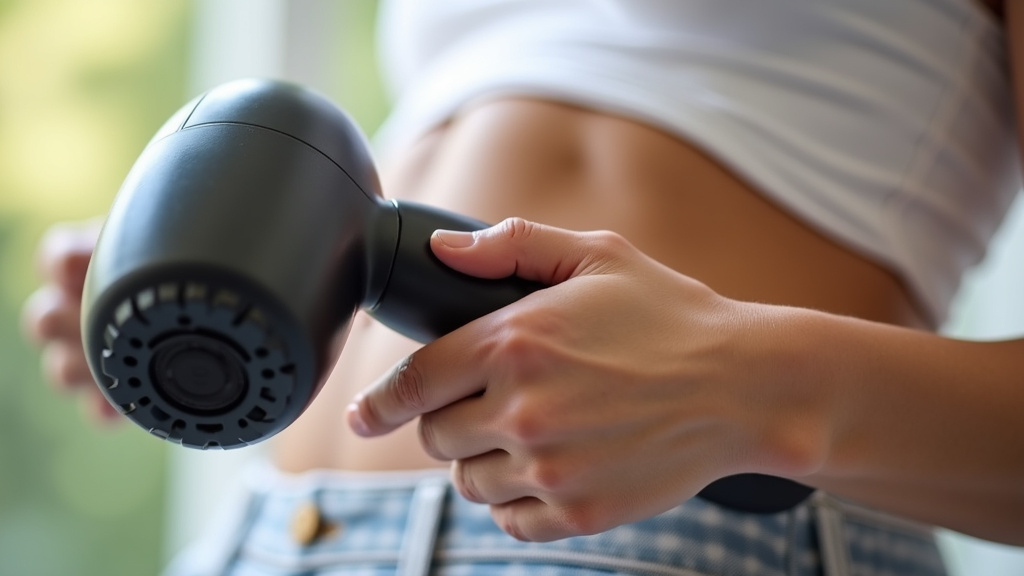
Using your percussion massager correctly is important for both safety and getting the best results. It’s not complicated, but there are a few things to keep in mind.
Preparation and Technique
Before you start, make sure your skin is clean and dry. You don’t need to use any lotions or oils, as these can make the attachments slip. It’s generally best to use the massager on bare skin.
When you turn on the massager, start with a lower speed. Gently place the attachment on the muscle you want to treat. You don’t need to press hard. Let the device do the work. Slowly glide the massager over the muscle in smooth, sweeping motions. Avoid bony areas or joints. Focus on the fleshy parts of your muscles.
Areas to Avoid and Precautions
It’s crucial to know where not to use the massager. Avoid using it directly on your head, face, or any bony prominences like your elbows, knees, or spine. Also, steer clear of any areas with open wounds, bruises, or inflammation.
If you have any underlying health conditions, such as heart problems, diabetes, or nerve damage, it’s wise to talk to your doctor before using a percussion massager. They can advise you on whether it’s safe for you. Listen to your body; if something feels painful, stop.
Session Length and Frequency
For most people, a massage session of 15-30 minutes is sufficient. You can focus on specific areas for a few minutes each. It’s generally recommended not to use the massager on the same muscle group for too long in one session. Overdoing it can sometimes lead to bruising or increased soreness.
In terms of frequency, using the massager 2-3 times a week is often recommended. However, this can vary based on your activity level and how your body responds. Some people use it daily for shorter periods. We found that consistency is more important than intensity for long-term benefits.
Here’s a quick checklist to help you get started:
- Read your massager’s manual first.
- Start on a low speed setting.
- Use it on bare skin.
- Glide gently over muscle areas.
- Avoid bony parts and sensitive areas.
- Listen to your body and stop if it hurts.
Conclusion
You’ve now learned what a handheld percussion massager is and how it can benefit your muscles. These devices offer a convenient way to target soreness, improve circulation, and ease tension right at home. By understanding their features and using them safely, you can effectively incorporate them into your wellness routine.
Ready to experience the relief for yourself? Consider which features will best suit your needs and start exploring your options for a handheld percussion massager today.
Frequently Asked Questions
Can a percussion massager help with chronic pain?
While percussion massagers can help alleviate muscle soreness and tension, they are not a cure for chronic pain. For persistent pain, it’s always best to consult with a healthcare professional. They can diagnose the cause and recommend the most appropriate treatment plan.
How often should I use a percussion massager?
For most people, using a percussion massager 2-3 times per week for 15-30 minutes is sufficient. Some individuals may benefit from daily use, focusing on specific areas for shorter durations. Listen to your body and adjust the frequency based on how you feel.
Are percussion massagers safe for all muscle groups?
Percussion massagers are generally safe for fleshy muscle areas. However, you should avoid using them directly on your head, face, bones, joints, or any areas with injuries or inflammation. Always refer to your device’s manual for specific instructions and warnings.
What’s the difference between a percussion massager and a regular massager?
A percussion massager uses rapid, pulsing strokes (like deep tapping) to penetrate muscles. A regular massager might use vibration, rolling, or kneading motions that are often more superficial. Percussion therapy aims to reach deeper into muscle tissue.
Can I use a percussion massager if I have sensitive skin?
If you have sensitive skin, start with the lowest speed setting and use a gentler attachment. Always use the massager on bare skin and avoid pressing too hard. If you experience any irritation or discomfort, stop using the device and consult a dermatologist.